Quality Starts at the Score: Achieving Superior Results in Glass Cutting
In flat glass processing, cutting is more than just the starting point—it’s the foundation of the entire production chain. Mastering this step significantly impacts every downstream process, improving production efficiency, reducing material waste, lowering costs, and increasing yield.
Whether you're producing toughened, laminated or insulated glass, a clean, accurate cut is essential to achieving the desired strength, safety and long-term durability of the final product. Poor edge quality not only compromises performance but increases the risk of failure during installation, or in service. The repercussions can extend far beyond the factory floor—leading to costly rework, customer dissatisfaction, or even liability.
In this article, we explore the critical tools, techniques, and best practices that ensure cutting quality. From professional handheld tools and premium consumables to state-of-the-art CNC machinery, FG Trading offers a comprehensive range of glass cutting solutions to help processors maximise efficiency, accuracy and quality—starting at the score.
Why Edge Quality Defines Glass Performance
Strength Starts at the Edge
The strength of the glass edge is directly influenced by the quality of the cut. Improper technique or inadequate tools can create defects that reduce edge strength—sometimes by 50% or more. This makes the glass more prone to breakage during further processing such as tempering, and leads to costly rework and production delays.
Downtime, Waste and Cost Implications
Poor edge quality also accelerates wear on seaming belts and grinding wheels, resulting in more frequent maintenance, reduced equipment life, and unplanned downtime. Any glass that proceeds to seaming, washing, coating, or assembly with compromised edges represents lost value and wasted resources.
Aesthetic and Functional Consequences
Defective edges pose a significant risk in applications subject to thermal stress, wind loads or movement—such as windows, facades, shopfronts, skylights, canopies and balustrades. They also compromise the visual finish in decorative or architectural installations where exposed edges must meet high aesthetic standards.
Understanding the Glass Cutting Process
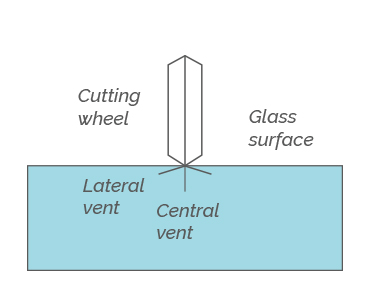
During cutting, a carbide wheel scores the glass surface, forming a line of microfractures known as a fissure. This fissure consists of a central visible vent and two invisible lateral vents, which guide the glass to break cleanly along the intended path. The depth of the central vent—called fissure depth—and its uniformity are key indicators of scoring quality.
A good score depends on selecting the right combination of cutting wheel diameter and angle and then applying the appropriate pressure or force. When correctly executed, a score appears as a fine, continuous line without skips, subsurface fractures or particles. This results in a clean breakout with minimal resistance and a flat, square edge finish free from irregularities or blemishes.
Key Factors That Influence Glass Edge Quality
Achieving consistent, high-quality cutting results depends on several interrelated factors:
1. Cutting Table Specifications
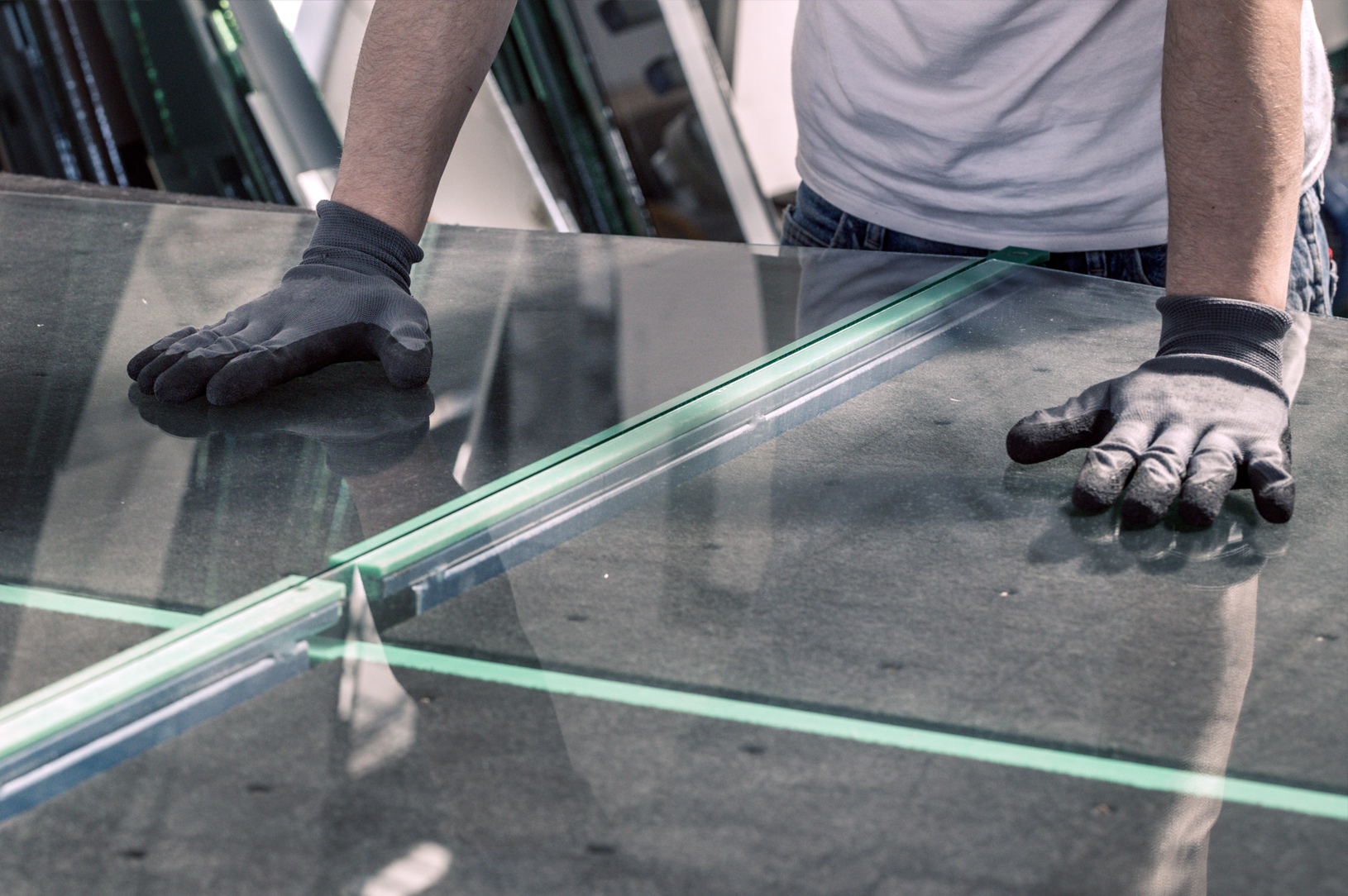
A flat, hard and level table is essential to support the glass and prevent deflection—especially with thin or laminated sheets. For manual operations, ergonomic height is also important to help operators apply even pressure without straining.
2. Cleanliness of Work Area and Glass Surface
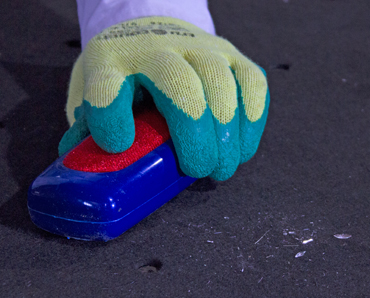
Dirt, powder, and glass particles on the table or glass surface can cause the cutting wheel to drag or skip, leading to an inconsistent score line. Surface contamination on the cutting table can cause scratching on glass sheets. Cleanliness directly contributes to cutting quality and reduces rework.
3. Glass Temperature
Cold glass reacts differently to room-temperature glass and may not break predictably. In colder climates or winter months, glass should be brought to room temperature to stabilise for 48–72 hours prior to cutting.
4. Cutting Wheel Angle and Diameter
The correct wheel must be selected based on the glass thickness and cut type. For straight cuts, a fissure depth of 6–10% of the glass thickness is recommended. Curved cuts typically require a deeper fissure (15–20%). Refer to manufacturer guidelines or technical tables when selecting the appropriate wheel.
5. Cutting Force (Pressure)
Too much pressure causes glass particles along the score and edge defects; too little results in shallow fissures, poor breakout and non-perpendicular edges. The pressure must match the wheel’s angle and diameter to ensure the correct fissure depth.
6. Cutting Speed
Speed interacts with applied force—faster speeds can deepen the fissure. Adjusting speed may improve results only after optimising other variables.
7. Cutting Fluid
A high-quality cutting fluid lubricates the wheel and prevents premature fissure healing between scoring and breakout. It also extends wheel life and improves score quality. Ensure consistent fluid application throughout the cutting process.
Choosing the Right Glass Cutting Equipment and Tools
The right equipment depends on the nature and scale of the business:
Manual Glass Cutting Equipment
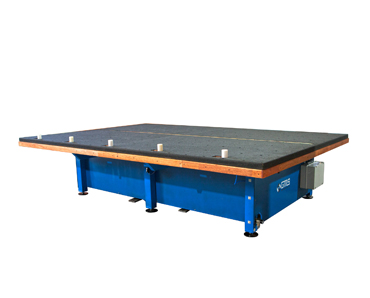
FG Trading offers manual glass cutting tables engineered for flexibility, ease of use and cost-effectiveness in small-scale glass and mirror cutting operations. The tables can be customised in both size and configuration, with the option to add a hydraulic tilting function for easier glass loading. One or two retractable breakout bars apply uniform pressure beneath the score line to ensure clean, consistent glass separation. Each table features a sturdy steel base, a professional-grade felt surface for stable, accurate cutting, and an integrated airflow system that enables smooth glass handling.
Recommended Manual Tools and Accessories:
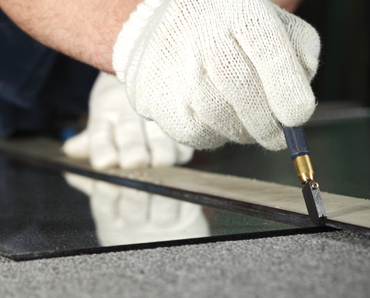
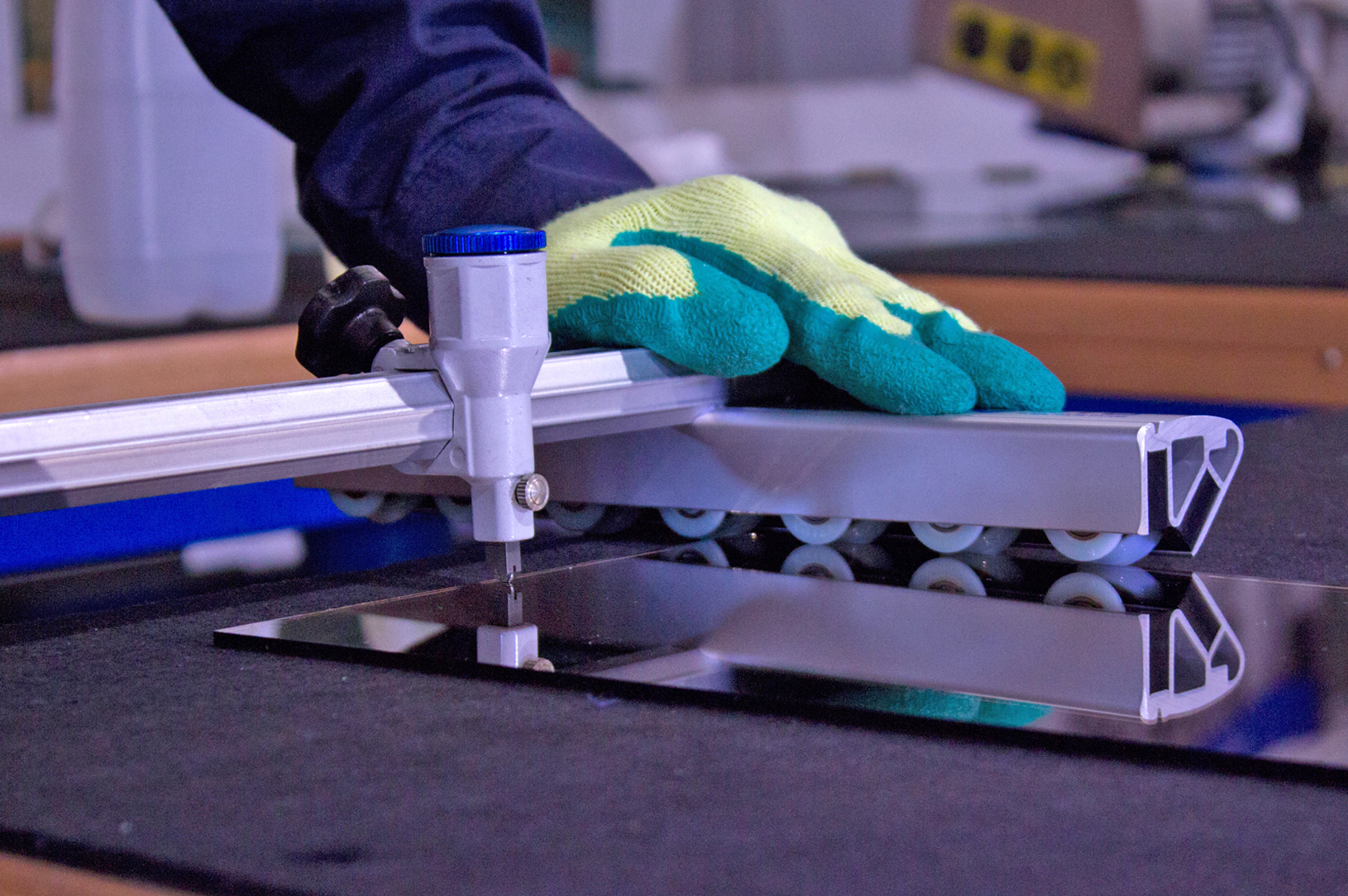
Professional handheld straight and circle cutters
Breakout tools, including glass breaking and cut-running pliers
Washable cutting fluid for use in manual glass cutting applications
Measuring and guiding tools, including T-squares, L-squares, straight edges, and cutting frames
Personal protective equipment including spectacles, aprons, wrist guards and gloves
Useful optional accessories such as the Glass Chip Brush and Glass Slicker
Manual Cutting Product Highlights:
Diamantor® Glass Cutter: Trusted by professionals for straight cutting, with a steel wheel, breakout notches and a contoured wooden handle.
TOYO® TC-17 Original Oil Glass Supercutter®: Considered one of the best in the industry, with a carbide cutting wheel, self-dispensing oil reservoir and patterned brass handle.
GTS EZY Cutter: A durable, T-shaped speed cutter with oil-fed carbide wheel for fast manual straight cutting up to 1800mm.
GTS Oil-Fed Circle Cutter: With suction base, oil-fed wheel and ball handle, it delivers precise circular cuts up to 1800mm in diameter.
CONDAGLASS N 60: A washable, low-evaporation cutting fluid for manual applications, leaving no residue.
Glass Chip Brush: A mechanical brush that collects splinters from table surfaces to prevent scratches and hand injuries.
Automatic Glass Cutting Machinery
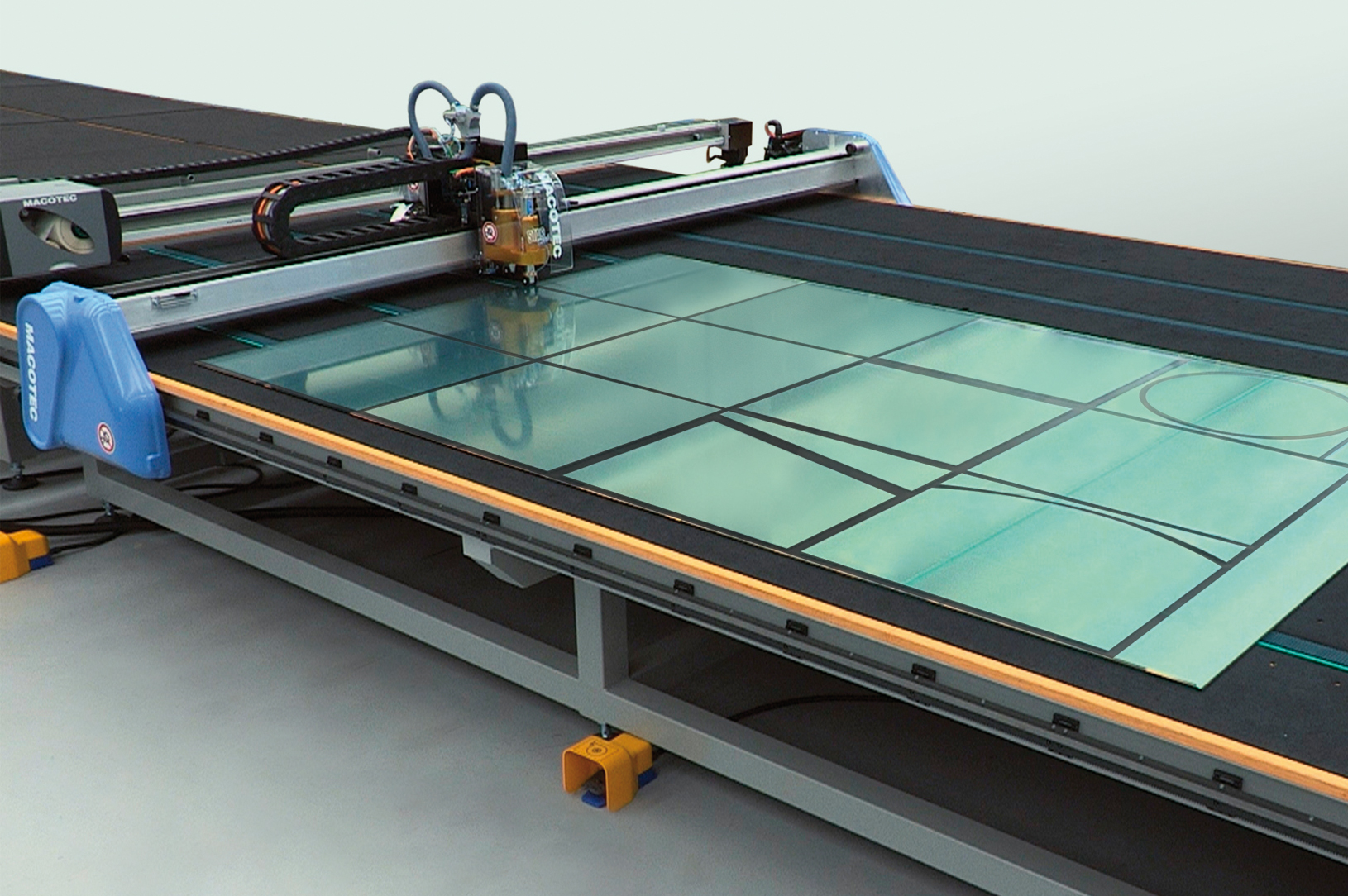
Automated CNC cutting systems are essential for meeting the demands of high-volume processing in the architectural glass, window fabrication and automotive industries. As the exclusive South African partner of Macotec, FG Trading supplies a complete range of solutions for cutting, handling and storing flat glass.
These include systems for both float and laminated glass, available as standalone tables or fully integrated automated lines customisable for any production requirements. Manufactured in Italy, the systems are engineered with a strong focus on quality, reliability and technological innovation, delivering high-speed precision with minimal operator input.
Automatic Cutting Product Highlights:
Macotec Master Shape 3.7 FR: Automatic table for straight and shaped cutting of float glass. Includes breakout bars and loading arms in a compact, high-performance format.
Macotec Star Cut 3.7: Automatic table for straight and shaped cutting of float glass. Includes breakout bars and a tilting work table and can be equipped with optional belts for the automatic transfer of glass.
Macotec Strato Active 3.7 E: Designed for laminated glass, featuring a PVB blade, pneumatic separation and built-in optimiser for fast, ergonomic cutting.
CONDAGLASS VP 600: A high-performance, solvent-based evaporating cutting fluid for both manual and CNC operations. Offers ideal viscosity, fast scoring, and clean evaporation with no residue.
The Importance of Machinery Maintenance for Consistent Results
Advanced machinery alone is not enough—precision cutting depends on regular maintenance and correct setup:
Ensure the cutting bridge is aligned and the table is level.
Inspect pillar posts, wheel holders, axles and cutting wheels regularly for wear.
Replace the cutting wheel based on usage—delays compromise the quality of the fissure, which in turn diminishes the scoreline clarity, makes breakout more difficult, and results in poor edge quality.
Check for lateral movement and axle wear each time a cutting wheel is replaced.
FG Trading supports its customers with local technical services, including installation, training, maintenance, and spare parts. From setup to long-term operation, we help ensure that your glass cutting systems run at peak efficiency with minimal downtime.
Superior Cutting Results for Long-Term Success
Superior edge quality is the foundation of every high-performance glass product. It’s not only essential for strength and aesthetics, but also for production efficiency, reduced material waste, and higher throughput—making cutting quality a strategic investment with measurable impact on your processes, profitability, and reputation.
A clean, accurate score doesn’t happen by chance. It’s the result of using the right tools, machinery, and techniques, combined with a deep understanding of the key variables that influence cutting performance. Whether you're cutting manually in a small workshop or running a fully automated CNC line, quality starts at the score.
Partnering with FG Trading provides a complete solution—professional tools, advanced machinery, premium consumables, and dedicated technical support—empowering you to cut with confidence and consistency.
The result? Fewer defects, reduced downtime, and a better return on every product produced.

 Back To Newsroom